
Marshall Center Unveils Next-Generation Program for Today’s Security Environment
The Marshall Center welcomed nearly 70 participants from allied and partner nations to the Strategic Competition and Russia course at the Marshall Center in Garmisch-Partenkirchen, Germany, on Jan. 26, 2026.
This first offering under the Marshall Center’s reimagined program is designed to strengthen European-led defense, promote burden-sharing, and equip participants with the skills needed to make real impact within their home nations and organizations.
“This course could not be more timely and is the start of the changes that we've made to address current security opportunities and challenges,” said Barre Seguin, Marshall Center director.
Those changes include a modular course design that allows for flexible participation, as well as the curriculum adaptability required to respond to policy demands in a dynamic security environment.
“It’s designed to address real world problems in a multinational, multi-dimensional environment,” said U.S. Marine Corps Col. Adam Jeppe, course director and military professor of transnational security studies.
Jeppe explained that participants begin by developing a clear understanding of their own problem sets before moving into practical, skills-based learning. As the course progresses, participants refine those problem sets, apply analytical tools, and develop tangible products they can take home and integrate immediately into their professional environments.
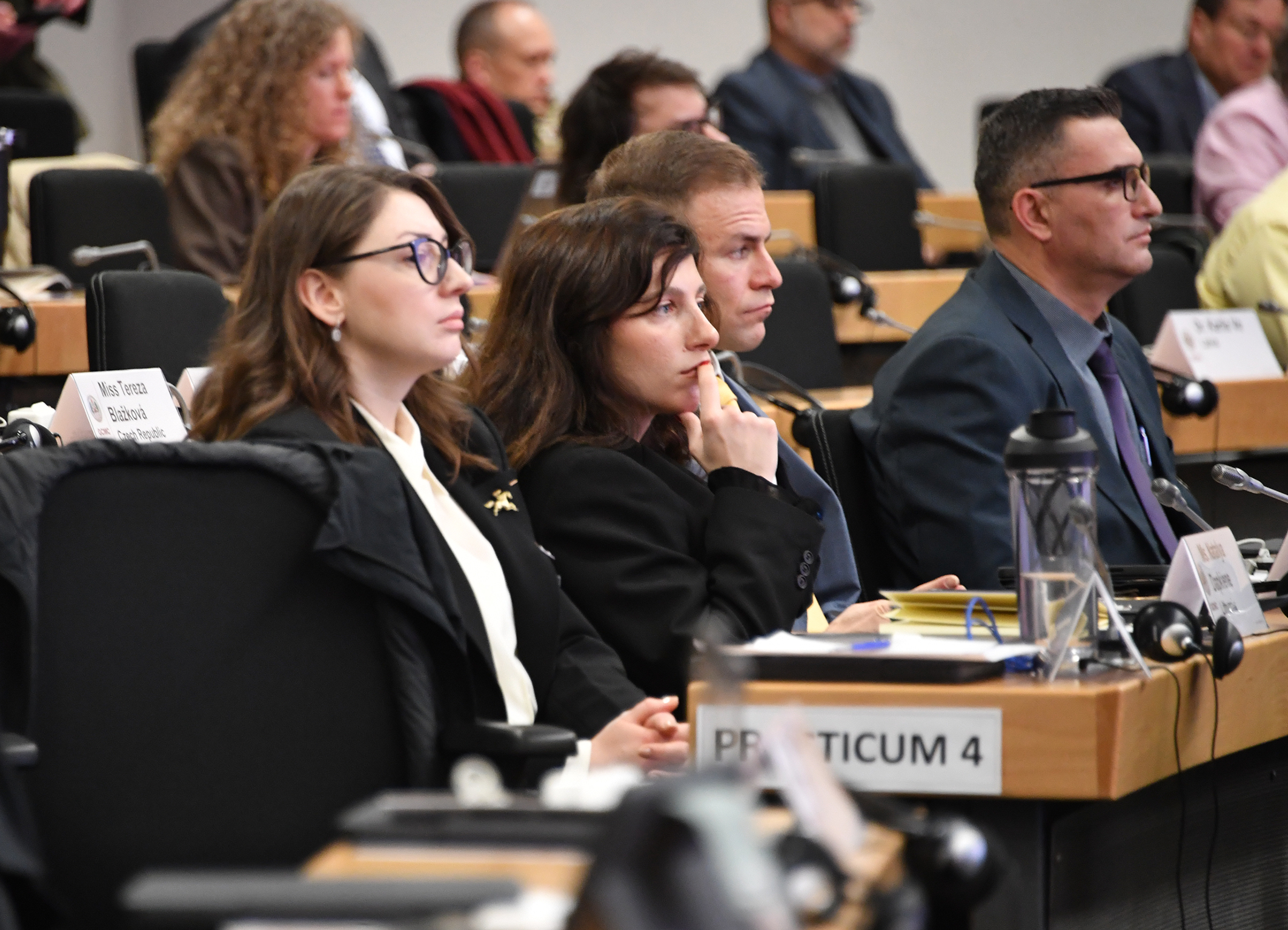
“This course is designed not just to help you understand Russia, but to help you think, write, and act strategically in a competitive world,” said U.S. Army Lt. Col. Courtney Clarksen, course co-lead and military professor.
Positioned within the Marshall Center’s broader program plan, the Strategic Competition and Russia course is intended to continuously refine practical application and learning throughout the year, informed not only by faculty expertise but also by the professional experience and perspectives participants bring into the classroom.
“As I look through where you all are from in your organizations, I can see that we have the right team together, with the right set of experiences, to be able to start at a baseline that increases the skills that you already have, and allows you to bring those back in a way that you can immediately apply those to your respective work,” Seguin said.