Marshall Center’s Reimagined Program Focuses on Skills-Based Training, Regional Expertise
Dec. 10, 2025
The Marshall Center is launching a new program plan in 2026, marking the most significant transformation of its resident courses, in-region engagements, and senior-level dialogues in more than three decades.
The new model replaces traditional stand-alone courses with an integrated program designed to strengthen European-led defense, promote burden-sharing among allies and partners, and ensure the Marshall Center can swiftly adjust to shifts in policy requirements. The goal of this transformation is simple: produce tangible outcomes that improve partner capability while remaining flexible and adaptive as new challenges emerge.
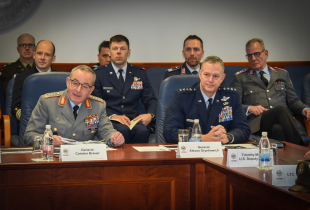
“We recognize that stronger partners are a strategic advantage,” said Barre Seguin, Marshall Center director. “Therefore, our role is to help nations turn increased defense spending and commitment into real capability. This new model is built exactly for that.”
A Model Built for Strategic Outcomes
The shift comes at a critical time. Europe’s security landscape continues to be shaped by the threat posed by Russia, China’s expanding influence, and a commitment from European nations to take on a greater share of their own defense. As defense budgets rise, so too does the need to ensure resources translate into institutional strength, planning capacity, and interoperability – core elements of credible deterrence.
In 2026, the Marshall Center will meet this need through an analytical process that continually assesses the security environment and the requirements of allies, partners, and policymakers. The adaptable program – led by regional academic experts at the Marshall Center and across its robust network with an emphasis on skills-based training – will identify demand and pivot as necessary to deliver the right expertise to the right audience at the right time.
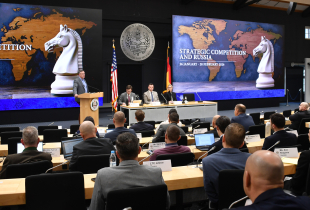
Beginning in January, the new program kicks off with a redesigned set of modular resident courses. The first of four resident courses, Strategic Competition and Russia, will focus on Russia’s evolving role and impact to global security, NATO and EU responses, and the tools of statecraft that shape strategic competition.
Additional engagements beyond resident courses that round out the Marshall Center’s 2026 program will include:
- GAP Analysis: a dialogue for policymakers responsible for capability development and strategic planning that addresses critical gaps in European capabilities, strategic alignment, and defense management
- In-Region workshops: which bring together subject-matter experts, policymakers, and defense industry leaders in key European partner countries to provide tailored, rapid-response education and engagement wherever partners face emerging challenges
- Senior Executive Seminar: a venue for senior policymakers and flag officers to confront challenges and opportunities to shape Europe’s defense posture
Details on all 2026 program engagements, as well as how and when to apply for the remaining resident courses, themed European-Led Defense, Hybrid Threats and Cybersecurity, and Emerging Security Threats, will be announced soon.
Altogether, the lineup of Marshall Center courses and events in 2026 will build on its internationally recognized reputation as a security cooperation leader and expand on its global network to develop skills among practitioners to provide solutions for European-led defense and burden sharing.
“Our reenvisioned program plan is designed to reinforce partner and institutional capacity, support coordinated defense investments, and improve interoperability across defense and civilian sectors,” said Bernard Finel, Ph.D., College of International and Security Studies dean. “Above all, we will ensure that the Marshall Center remains responsive to the demands of modern conflict and the expectations of a more self-reliant Europe.”